
Gid pou nouvo imigran k ap lwe kay Ozetazini

Konprann kijan lokasyon fonksyone Ozetazini.
Konprann kijan lokasyon fonksyone Ozetazini.
Jwenn yon kay Ozetazini ka difisil paske gen anpil kay abòdab, sitou pou moun ki pa touche anpil lajan. Malgre pa gen anpil kay, plizyè moun Ozetazini kontinye lwe kay yo. Pri lwaye yo ap varye selon kote w ap viv la. Gen kèk vil ki pi chè pase lòt. Lè w ap chèche yon kay pou lwe, ou pral jwenn diferan kalite kay:
- Ou ka lwe yon chanm nan yon kay kote ou pataje kwizin nan ak twalèt la ak lòt moun.
- Ou ka jwenn yon apatman nan yon ti bilding oswa yon gwo bilding.
- Ou ka lwe yon kay konplè tou pou ou menm ak fanmi w (yon kay pou yon sèl fanmi).
Lè w deside lwe yon kay, anjeneral ou siyen yon dokiman enpòtan yo rele yon kontra lwaye avèk yon moun oswa konpayi ki posede oswa jere pwopriyete a. Yon kontra lwaye se yon kalite akò kote w dakò pou peye pwopriyetè a yon kantite lajan espesifik chak mwa. Yon lòt bò, pwopriyetè a dakò pou kite w viv nan kay la pou yon peryòd fiks, ki souvan se yon ane. Yon kontra lwaye pou yon lane se bagay ki nòmal Ozetazini. Menm si li ka sanble se yon angajman pou lontan, li pwoteje w tou. Sa vle di pwopriyetè w la pa ka mande w sòti oswa ogmante lwaye w pandan peryòd sa a. Ou ka konprann kontra lwaye an kòm yon seri règ enpòtan ki ekri pou kay w ap lwe a.
Planifikasyon rechèch ou an
Anvan ou kòmanse chèche kay ki disponib, li enpòtan pou w planifye ak anpil atansyon.
- Konnen Chif Ou yo: Reflechi sou konbyen lajan fanmi w ka depanse alèz pou lwaye chak mwa. Yon gid jeneral ki montre konbye lwaye w dwe anviwon 30-35% nan revni w apre taks.
- Lis Bezwen Ou yo: Kisa fanmi w vreman bezwen nan yon kay? Reflechi sou kantite chanm ki genyen. Epitou, konsidere lavi chak jou ou. Eske kay la nan yon bon kote ki an sekirite pou travay oswa lekòl? Eske gen transpò piblik (tankou yon bis oswa yon tren) tou pre si w bezwen li? Èske gen moun nan fanmi ou ki bezwen aranjman espesyal nan kay la (pa egzanp, pa gen eskalye, oswa yon twalèt ki fasil pou yon moun nan yon chèz woulant itilize)?
Reyalite finansye lokasyon nan peyi Etazini
Lwe yon kay Ozetazini enplike plis pase jis peman lwaye mansyèl la. Konprann tout depans sa yo depi nan kòmansman an ede ou byen fè bidjè epi evite sipriz.
Yon depo garanti se youn nan depans inisyal ki pi enpòtan yo. Pifò lokasyon mande peman sa a, ki tipikman egal ak yon mwa lwaye, menm lè kantite lajan an ka varye selon kote a oswa konpayi jesyon an. Pwopriyetè yo kenbe lajan sa a pou kouvri domaj pwopriyete ki depase itilizasyon nòmal oswa nenpòt lwaye ki pa peye lè yon lokatè kite. Si w retounen inite a nan kondisyon orijinal li, y ap remèt ou depo garanti ou te bay la. Prepare w pou peye tou de, depo garanti a ak lwaye premye mwa a anvan ou antre. Pa egzanp, yon lwaye premye mwa $1,500 plis yon depo garanti $1,500 totalize yon peman $3,000 ki dwe fèt davans.
Ou dwe konsidere sèvis piblik yo tou. Mande pwopriyetè yo ki sèvis piblik ki nan lwaye a ak kilès ou peye separeman. Pandan dlo, retire fatra, oswa chofaj pafwa vini ak lwaye a, elektrisite, gaz (pou chofaj ak pou kwit manje), ak Entènèt souvan pa vini. Ou pral bezwen fè aranjman pou peman separe ak konpayi sèvis piblik yo. Sa ka enplike kreye nouvo kont sèvis piblik epi peye yon depo.
Gen lòt depans potansyèl ki egziste. Gen kèk pwopriyetè ki chaje yon frè aplikasyon ki pa ranbousab (jeneralman $30–$70 pou chak aplikan adilt) pou verifikasyon antereyan ak kredi. Si ou gen bèt kay, pwopriyetè yo ka mande yon frè bèt kay adisyonèl ki pa ranbousab oswa yon depo bèt kay ranbousab, plis "lwaye bèt kay" kontinyèl chak mwa. Lòt depans yo ka gen ladan frè pakin nan kèk bilding oswa zòn, ak pri asirans lokatè pou pwoteje byen ou yo kont vòl oswa domaj.
Lokatè yo gen responsablite tou ki afekte depans jeneral yo, tankou ti antretyen tankou chanje anpoul ak kenbe alantou a pwòp. Nan kèk lokasyon, espesyalman kay inifamilyal oswa duplex, lokatè yo ka responsab tou netwaye lakou oswa retire nèj. Swiv tout règ lokasyon yo enpòtan paske vyole règleman yo (pa egzanp, lè w gen bèt kay ki pa otorize oswa domaje pwopriyete a) ka mennen nan frè adisyonèl oswa menm ekspilsyon.
Jwenn yon kay lè anpil moun ap chèche
Li difisil pou jwenn yon kay abòdab pou lwe paske anpil moun ap chèche lojman an menm tan. Wout pou jwenn yon kay pou lwe mande pasyans ak pèseverans. Rete enfòme, poze kesyon, epi sèvi ak sipò ki disponib pou ou. Gwoup ki sipòte nouvo moun ak lòt òganizasyon kominotè lokal yo ka ofri èd. Yo konnen sou lojman nan zòn ou an epi yo ka gide ou nan resous itil.
Pandan w ap chèche, ou ka tande nouvo mo pou diferan kalite lojman ak lwaye:
- Kontwòl Lwaye oubyen Estabilizasyon Lwaye: Gen kèk vil atravè Etazini ki gen lwa lokal espesyal ki limite konbyen yon pwopriyetè ka ogmante lwaye a chak ane oubyen konbyen fwa yo ka ogmante l.
- Lwaye sou pri mache: Sa yo se kay kote pwopriyetè a ka fikse nenpòt pri. Sa yo ka chè, epi pri a ka chanje selon kote yo ye a.
- Kay ki melanje moun ki gen diferan nivo lajan: Sa yo se bilding kote yo lwe kèk kay nan pri mache a, epi lòt yo gen lwaye ki pi ba pou moun ki gen revni ki pi ba.
- Lojman sosyal: Gouvènman an ede konstwi epi peye pou kay sa yo, kidonk lwaye a anjeneral pi ba epi li baze sou revni ou.
- Seksyon 8 oubyen Koupon Chwa Lojman: Sa yo se pwogram gouvènman ki ede peye yon pòsyon nan lwaye ou dirèkteman bay pwopriyetè a.
Gen kèk nan opsyon sa yo, tankou lojman sosyal oswa Seksyon 8, ki ka fè lwaye a pi bon mache. Sepandan, anjeneral ou bezwen aplike pou yo, epi ka gen lis datant ki long. Moun ak gwoup k ap sipòte w yo ka ede w aprann ki opsyon lojman ki ta ka posib epi reyalis pou ou menm ak fanmi w. Pou aprann plis bagay sou Pwogram Bon Chwa Lojman an oswa Seksyon 8 la, vizite U.S. Department of Housing and Urban Development website.
Enspeksyon Anvan Ou Antre nan Kay la
Anvan w siyen kontra lwaye a epi anvan w antre nan kay la, li enpòtan pou w tcheke apatman an byen. Poukisa? Si w jwenn pwoblèm, ou ka mande mèt kay la korije yo anvan w antre. Epitou, fè enspeksyon sa a pwoteje w. Ou ka kenbe prèv (tankou pran foto) ki montre kèk pwoblèm te la deja anvan w te rive. Prèv sa yo ka ede w pou mèt kay la pa mete pwoblèm sa yo sou do w pita.
Sa Pou Gade Lè W Ap Enspekte Yon Kay
Se yon bon lide pou itilize yon lis verifikasyon lè w ap enspekte yon kay. Men kèk bagay enpòtan pou tcheke. Pou yon lis verifikasyon ki pi detaye, ou ka revize Lis Verifikasyon Egzanp Vizit Lojman sou Tablo Telefòn sa a.
- Kondisyon Jeneral: Gade toutotou kay la. Eske li pwòp? Eske li sanble byen antreteni? Tcheke pou nenpòt siy bèt nuizib (tankou sourit oswa moustik). Èske penti a an bon eta oswa eske l ap kale?
- Sekirite An Premye: Tcheke ke tout detektè lafimen ak detektè monoksid kabòn yo ap fonksyone (Monoksid kabòn se yon gaz danjere ou pa ka wè oswa pran sant). Gade ak anpil atansyon pou nenpòt fil elektrik ki pa kouvri oswa nenpòt fil ki toupre yon sous dlo. Asire w tout fenèt ak pòt yo ouvri, fèmen, epi bloke byen pou kenbe kay la an sekirite.
- Dlo ak Plonbri: Louvri dlo a nan tout lavabo ak douch yo. Eske l ap koule byen epi li vin cho? Asire w twalèt yo tire dlo a byen. Gade anba lavabo yo pou nenpòt flit dlo oswa siy domaj dlo sot pase yo, tankou tach oswa bwa mou.
- Chofaj, Refwadisman, ak Aparèy: Si kay la gen yon aparèy chofaj oswa èkondisyone (AC), tcheke si tou de ap mache byen. Nan kwizin nan, asire w ke fou a, recho a, ak frijidè a ap mache byen.
- Limyè ak Elektrisite: Limen epi etenn tout bouton limyè yo. Teste priz elektrik yo pou asire w yo gen kouran. Yon fason fasil pou teste priz yo se branche yon chajè telefòn.
Up-to-date information
Find out more
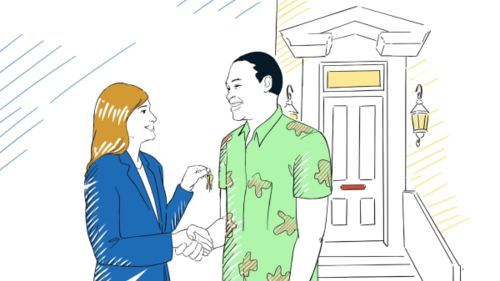
Ozetazini, anpil moun lwe kay oubyen pataje lojman. Lè w ap chèche lojman, li enpòtan pou w konprann bidjè w...
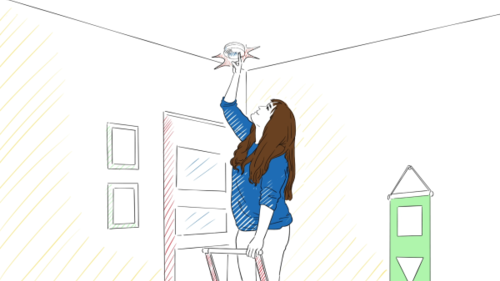
Konnen kijan pou pran prekosyon nan kay la enpòtan — pou ou, moun ki rete avèk ou yo, ak vwazen...
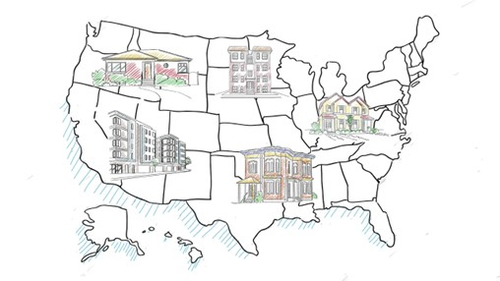
Lè w rive Ozetazini, ou dwe konnen kay ou a kapab pa sanble ak kay ou te wè nan pwogram...